
Il barbiere di Siviglia
«EATING, LOVING, SINGING … LIFE ACCORDING TO ROSSINI»
One of Rossini’s most famous operas, Il barbiere di Siviglia, deploys a comedy full of rhythm and wit, where the cunning Figaro employs a thousand intrigues to help Count Almaviva win Rosina’s heart. A fresh opera where humour and cunning triumph.
Andrzej Filończyk plays the main character, together with Leonor Bonilla, Santiago Ballerini, Paolo Bordogna and Simón Orfila. Brilliant and full of energy, this opera turns each scene into an irresistible theatrical game.
Pedro Bartolomé, music and artistic director of the Youth Symphony Orchestra of Burgos, conducts the BOS in this opera that progresses to the rhythm of vibrant and catchy music.
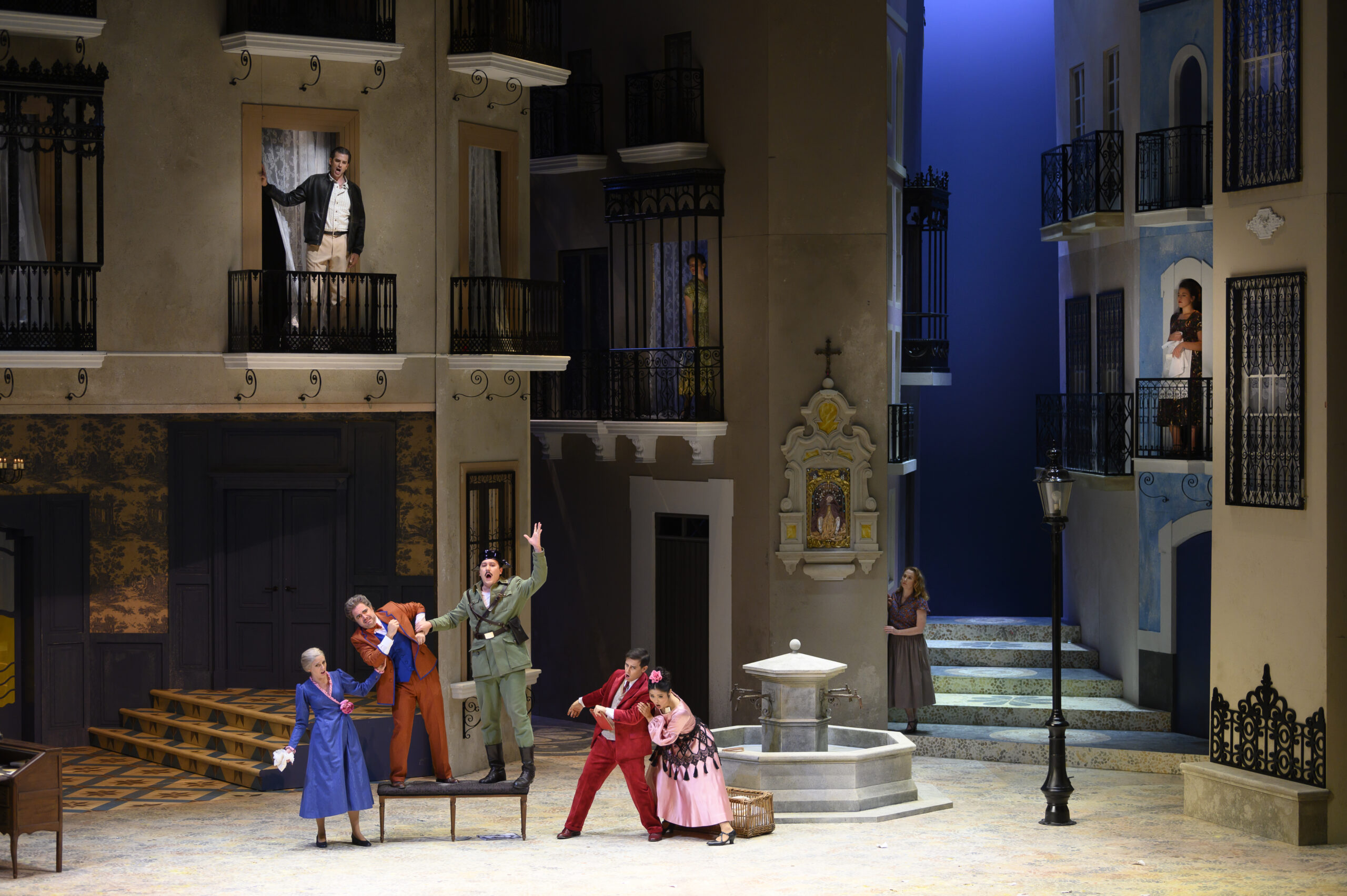
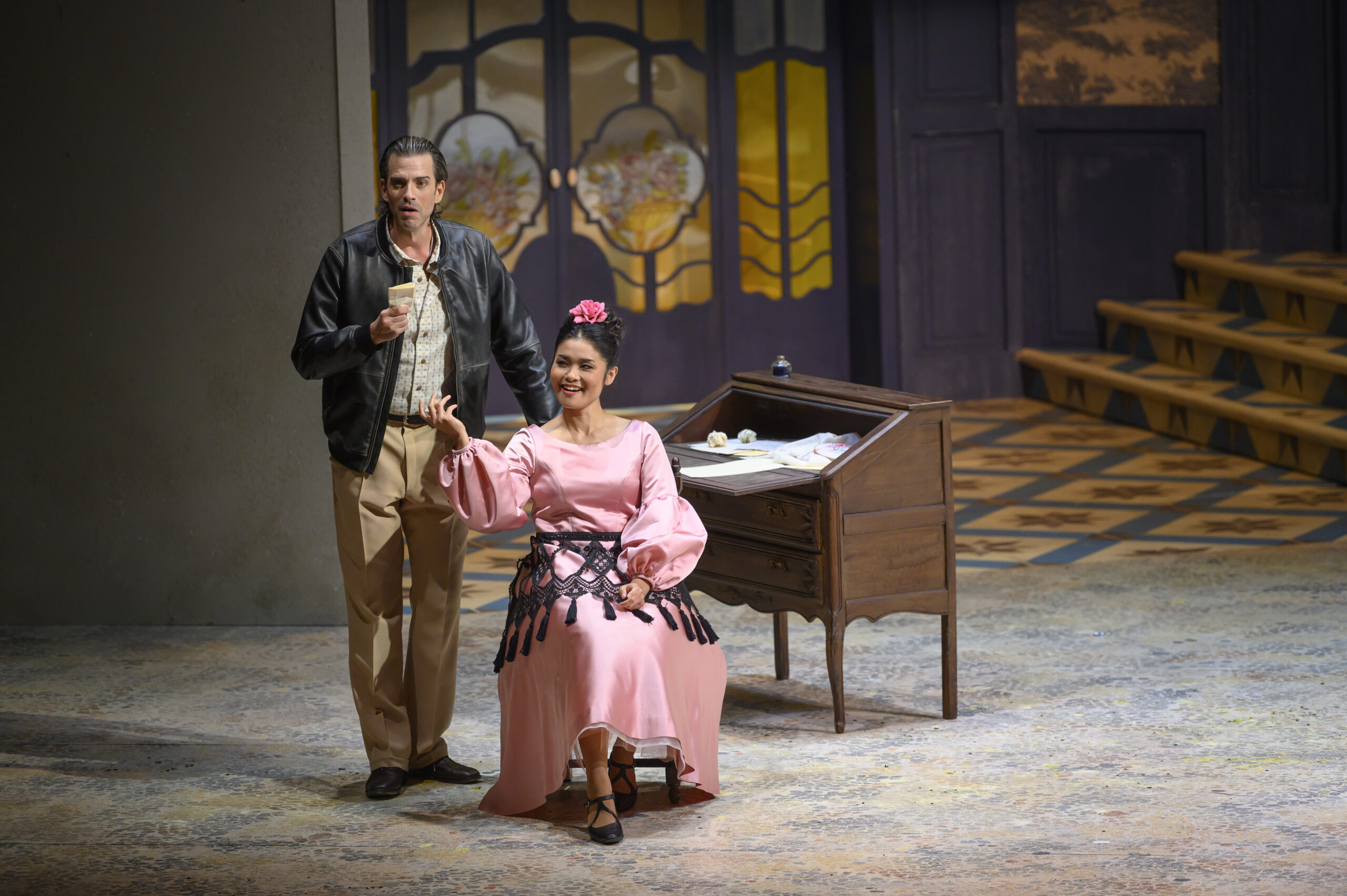
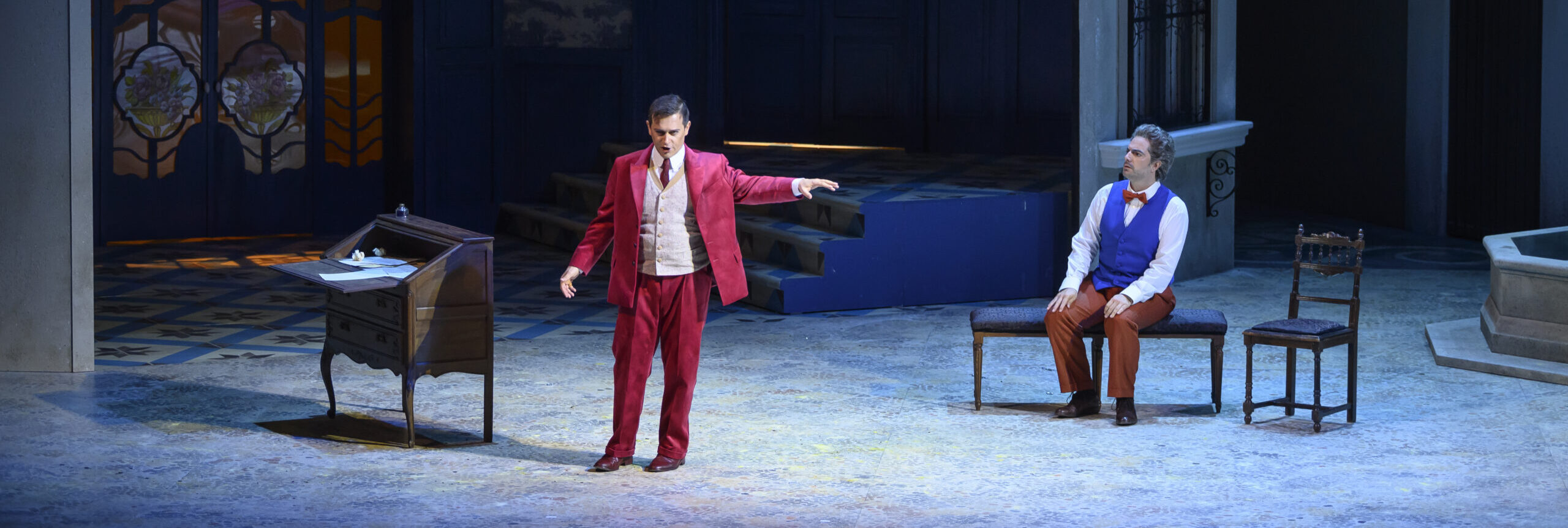
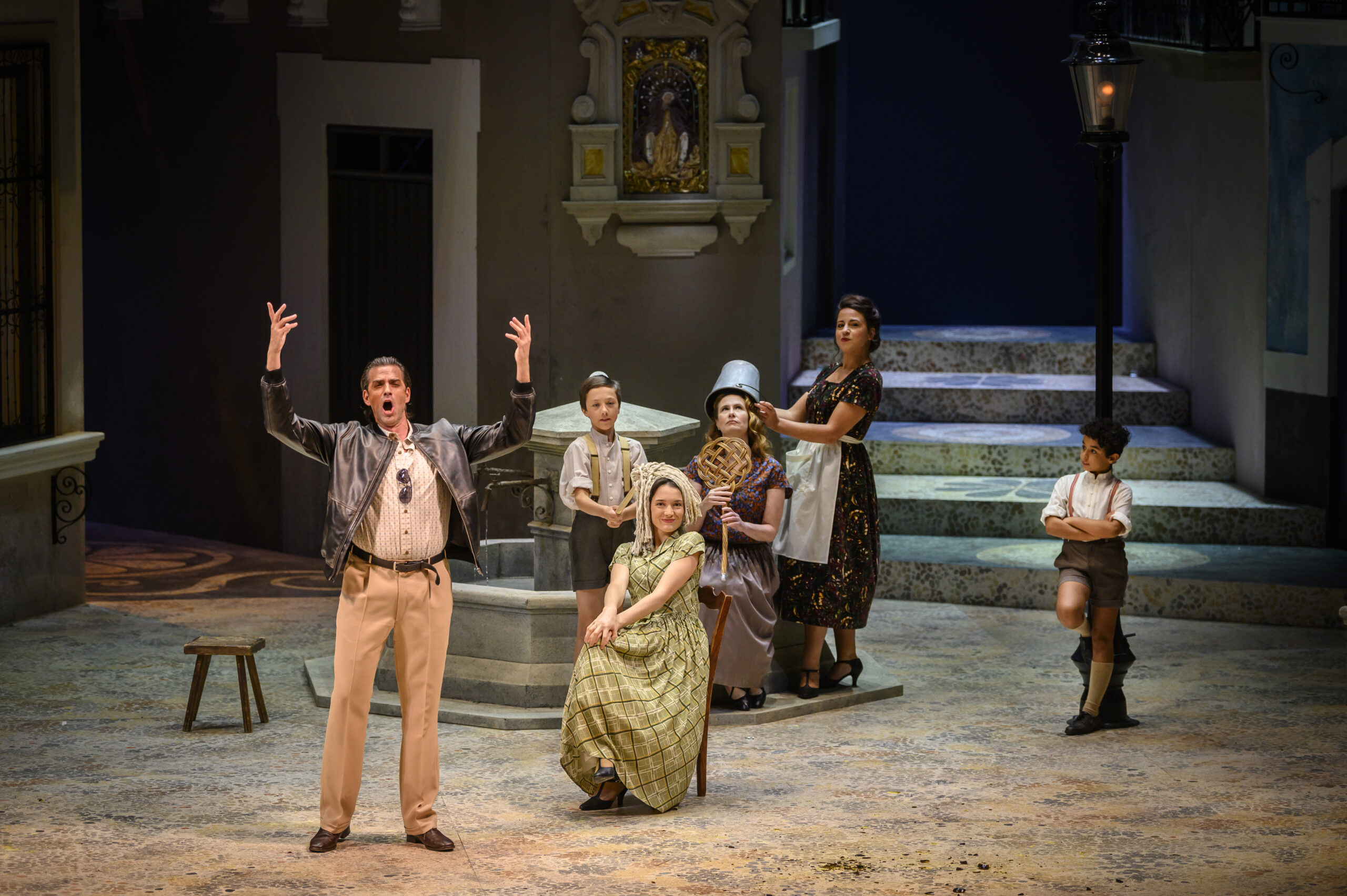
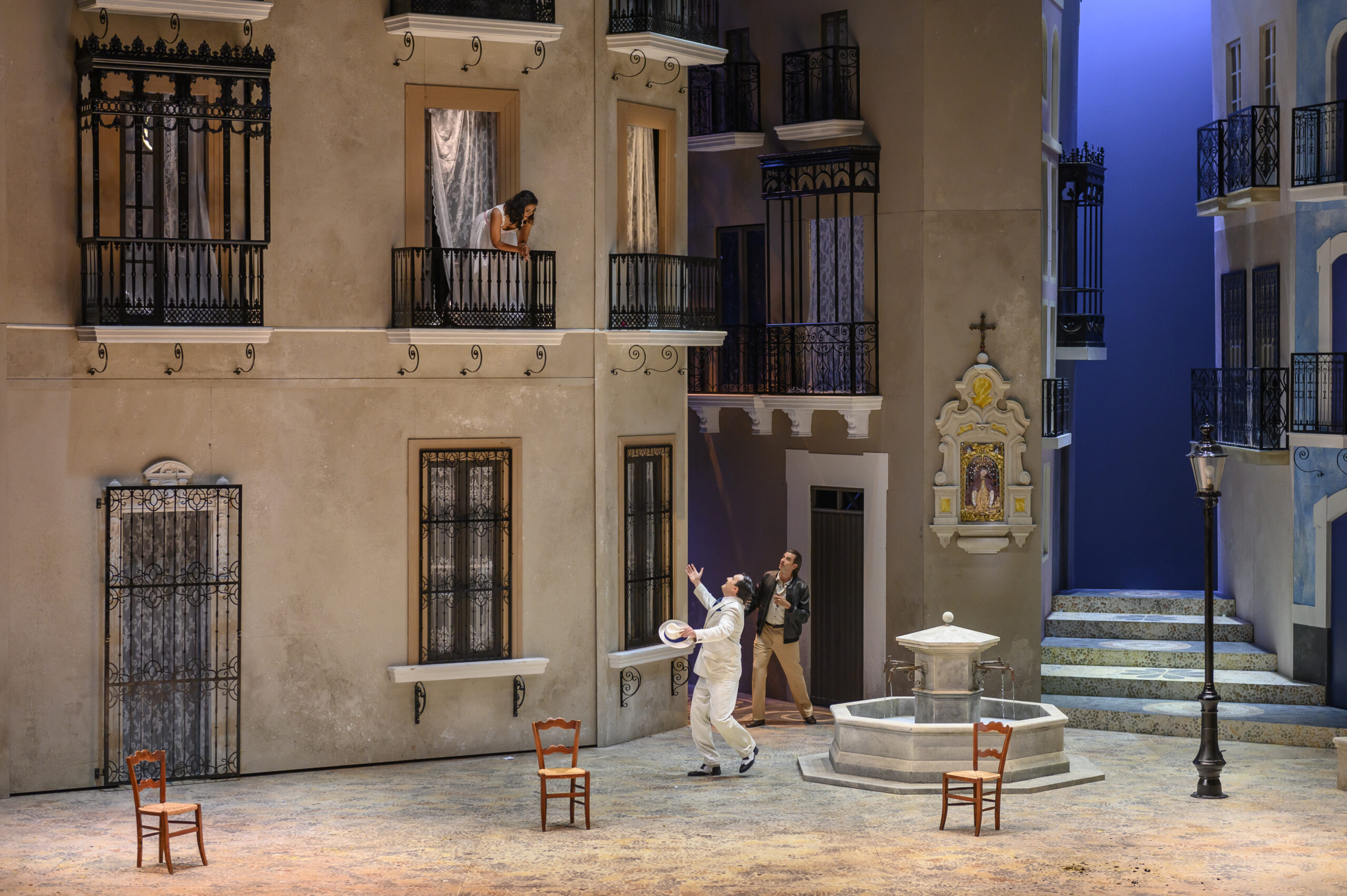
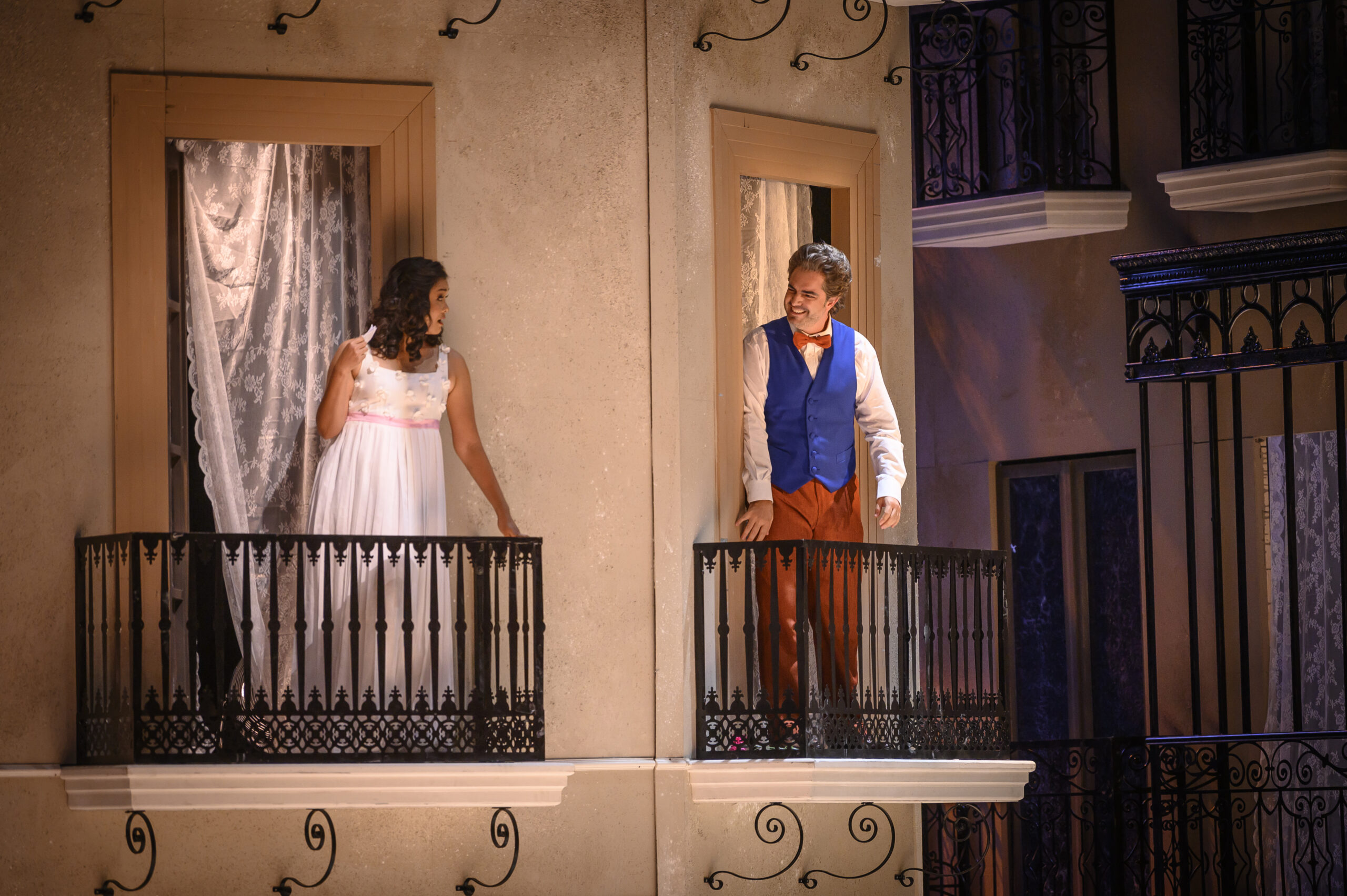
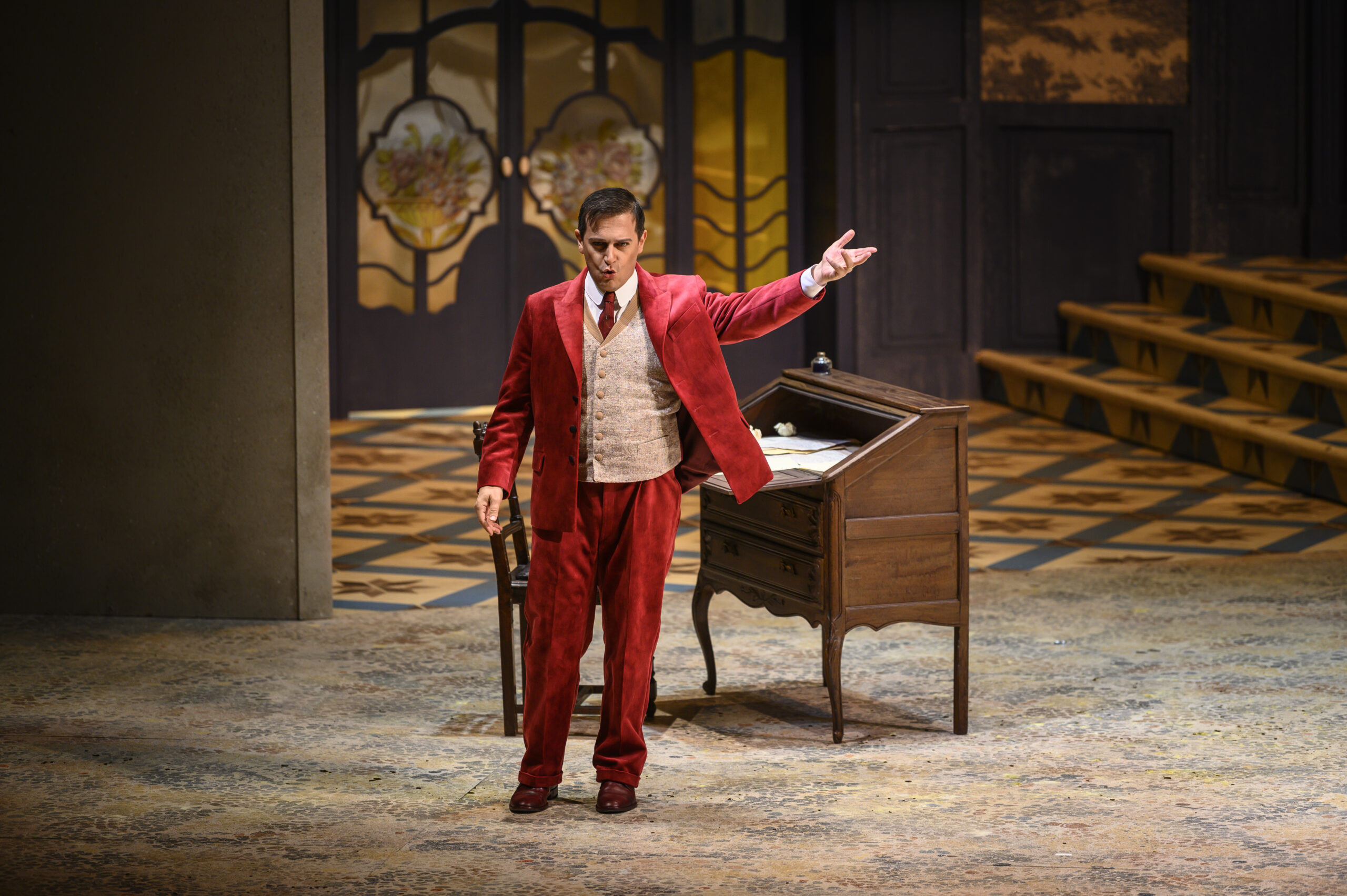
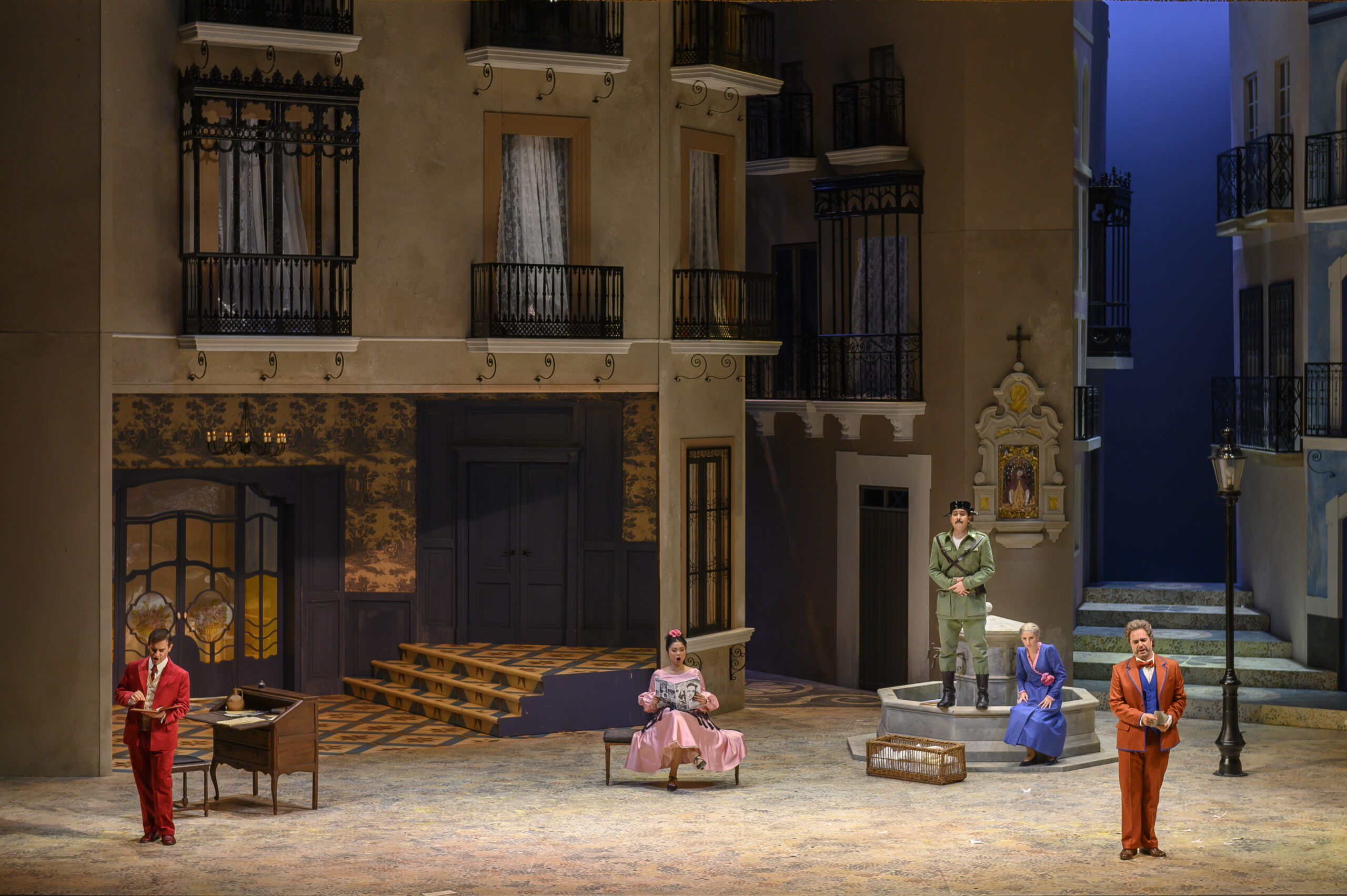
Vincent Dujardin makes his debut in ABAO with a production for the Ópera Royal Wallonie-Liége that transposes the action to Seville in the 1950s. The stage design consists of a square surrounded by buildings that unfold scene by scene revealing from the hall to the music room.
Act I
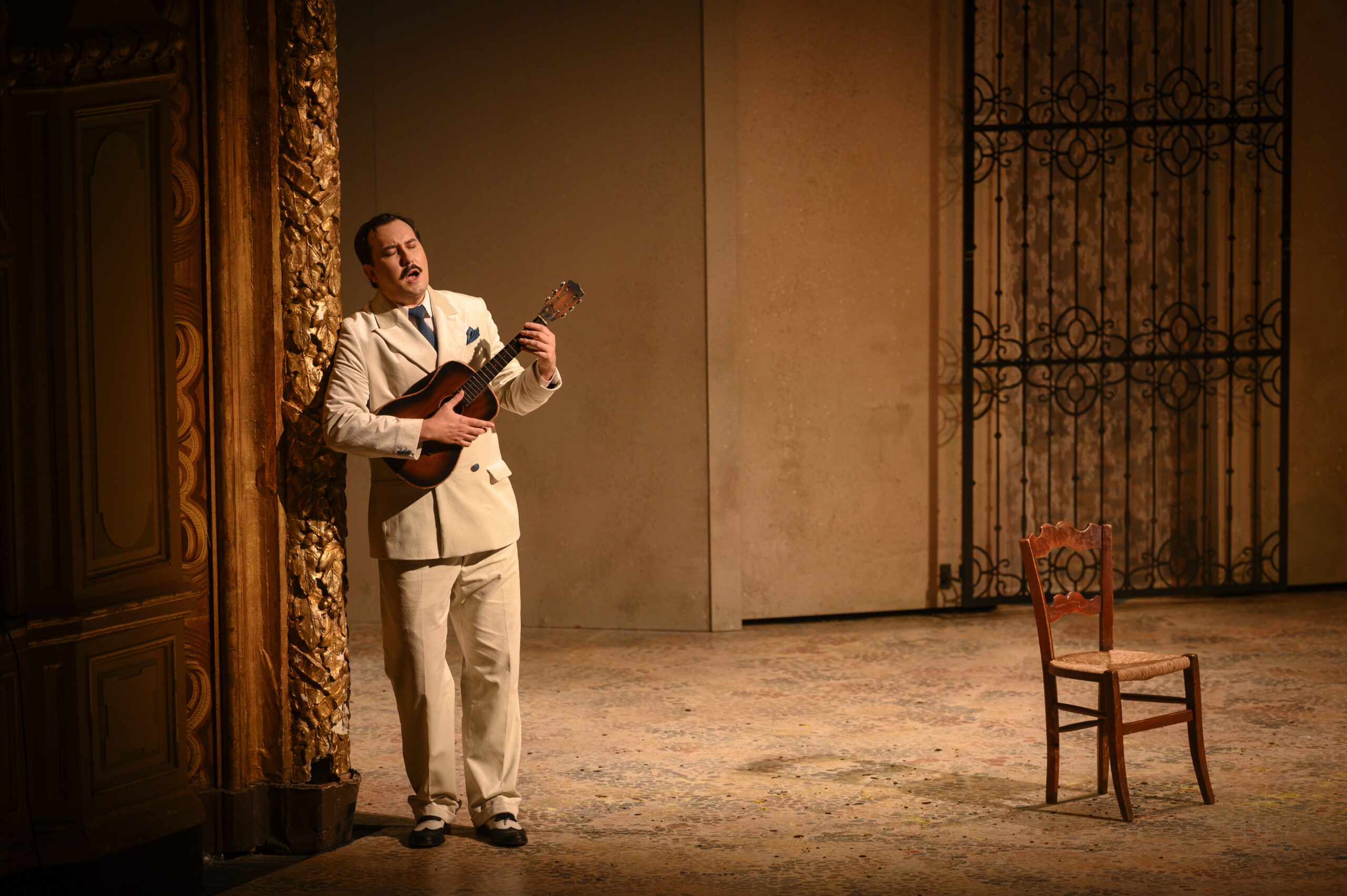
The scene is laid in Seville. A group of musicians gather beneath the windows of a house just before dawn. Count Almaviva serenades Rosina, whom he has recently met in Madrid, in the hope of winning her heart. But, despite his eloquence, there is no response and, at daybreak, the Count senses that it would be wise to go. The musicians noisily thank the Count for his generosity and exit, leaving him alone with his loyal servant Fiorello.
Almaviva is still hoping to catch sight of Rosina when the sound of cheerful humming warns him that a stranger is approaching. Ever cautious, he hides, only to discover that it is his old friend Figaro, a barber who has been living in Seville for some time. After hearing the Count’s plans, Figaro agrees to help him, as he has done on many occasions before. Luckily, the barber knows Rosina well, acting as he does as general factotum in her household. The door opens and out steps Rosina’s guardian, the elderly Dr. Bartolo, who hopes to marry his ward. Bartolo firmly closes the door behind him and mutters a few words, making the Count suspect that passion for Rosina beats in the old man’s heart.
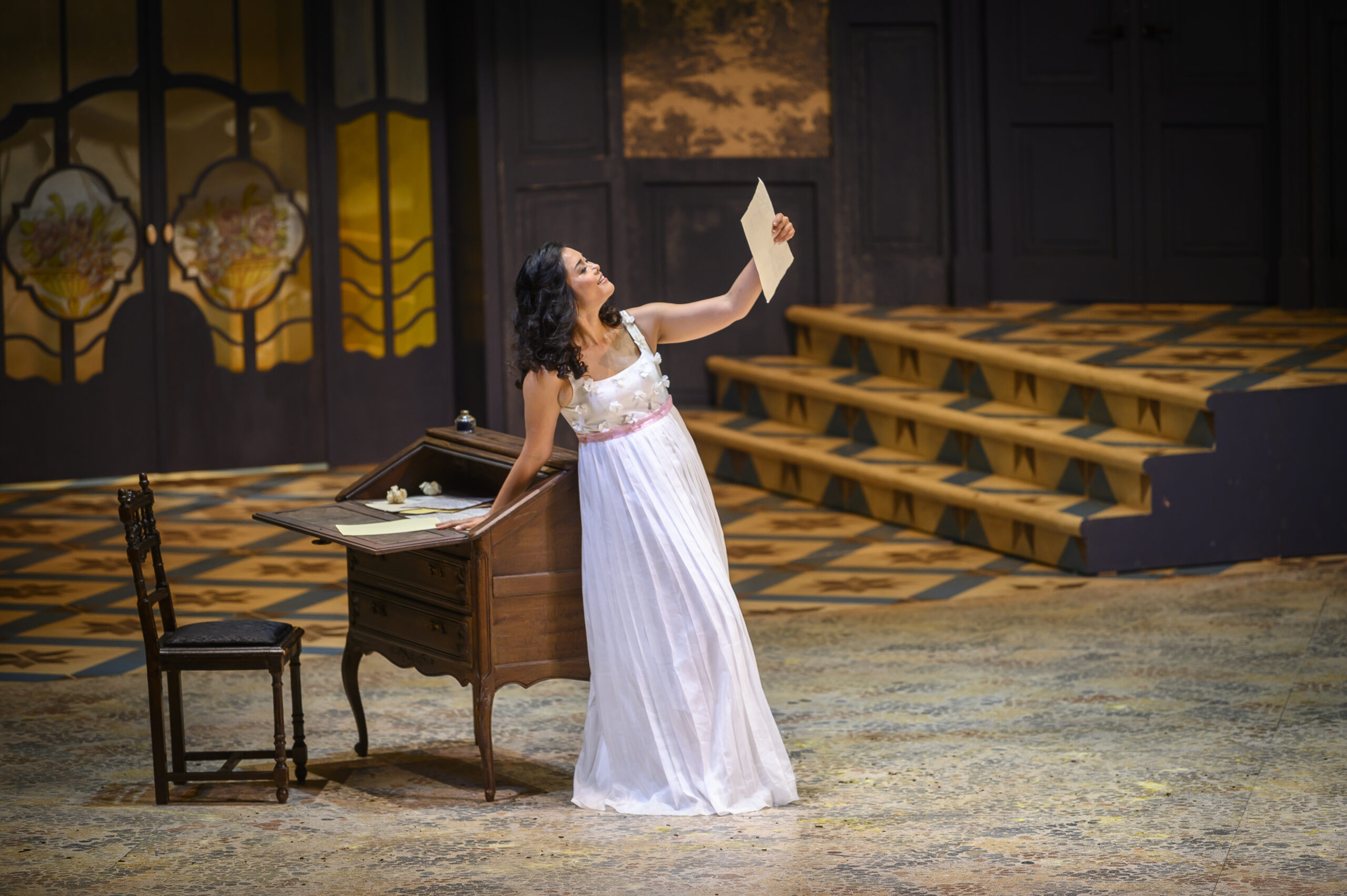
Taking charge of the situation, Figaro tells the Count to reveal his name and declare his love in another serenade. This time he is more successful, for Rosina hints that his attentions are not unwelcome. Figaro and the Count quickly come to an understanding. The former is driven by passion and the latter by the prospect of financial gain, and Almaviva’s wealth prompts Figaro to come up with a particularly ingenious and well thought out plan. An army regiment is due to arrive that afternoon and, by claiming to be a soldier who has been billeted to Rosina’s house, Almaviva will be able to meet his loved one. Rosina is preparing to make contact with her secret admirer. She has already written him a note and is now wondering how to make sure he receives it. Figaro enters the room and wastes no time in telling Rosina that his “cousin Lindoro” (in fact, Almaviva) is deeply in love with her. He stops talking when the eternally suspicious Bartolo comes in to check that the house is safe against intruders. A regular guest, Don Basilio, a music master, incorrigible swindler and a friend of Bartolo’s, announces that Count Almaviva is in town and must be got out of the way, even if it proves necessary to resort to such a base method as slander.
Figaro and Rosina have overheard the entire conversation. They discuss the arrangements for the meeting with “Lindoro”, whom the barber says he will shortly try to smuggle into the house; all he needs is a note (which, of course, Rosina has already written) to encourage him. A few minutes later, realising that the increasingly jealous Bartolo has returned, Figaro leaves. There is a thunderous knocking at the door and Almaviva, disguised as a drunken soldier, comes in and demands lodging. Bartolo pleads exemption from billeting and chaos breaks out. “Lindoro” takes advantage of the situation to slip Rosina a note, but is spotted by her guardian, who protests vehemently. There follows a brouhaha which only the arrival of the police brings to a halt. Much to everyone’s astonishment, however, the police officer not only fails to arrest the soldier but actually salutes him.
Act II
Keen to learn more about the solider, Bartolo has visited the regiment’s headquarters, where no trace of him can be found. Almaviva appears at the door, now disguised as a cleric. Pretending to be Don Alonso, a pupil of Basilio’s, he says that he will be giving Rosina her regular singing lesson today because Basilio is ill. To allay Bartolo’s suspicions, he shows him Rosina’s note, which has apparently fallen into his hands by pure chance. His reason for doing so –he says– is to persuade Rosina that her lover is unfaithful. The lesson begins and, with the aid of Figaro (who has an appointment to shave Bartolo and who manages to procure the key to Rosina’s room), the young couple are at last able to talk freely.
Everything seems to be turning out well when, much to Bartolo’s surprise and Figaro’s annoyance, Basilio appears. However, after bribing Basilio with a bag full of money, the Count spins a plausible tale and manages to persuade Bartolo that Basilio’s presence might jeopardise their chances of convincing Rosina of her suitor’s unfaithfulness. Somewhat bewildered, the music master leaves, but the lovers are still unable to enjoy a moment of peace. They have only just had time to make plans when a slip of the tongue causes Bartolo to realise that Don Alonso and the soldier of that morning, whom he believes to be his rival’s friend, are one and the same. Once again, Almaviva has no choice but to flee.
Night has fallen and Seville is in the grip of a big storm. Figaro and the Count brave the weather and arrive at their appointment on time, only to find a furious Rosina waiting for them. According to her guardian, “Lindoro” is planning to kidnap her and deliver her into the hands of count Almaviva. Rosina, never suspecting the double identity of “Lindoro”, is outraged, but the misunderstanding is quickly cleared up and the two lovers, taking advantage of the presence of Basilio and a notary (whom Bartolo, anxious to marry his ward as quickly as possible, has summoned), draft their marriage contract. At that moment, Bartolo enters with some police officers. Once the true facts emerge, the old man has no choice but to accept that he has been beaten by his rival, Count Almaviva.
Luis Gago
He is an editor and music critic for El País and co-director of the Chamber Music Festival of the Beethoven-Haus in Bonn. He usually prepares the subtitles in Spanish for the Royal Opera House, the English National Opera and the Digital Concert Hall of the Berlin Philharmonic Orchestra.
Sponsored by: