Adriana Lecouvreur
The most famous opera by Cilea, Adriana Lecouvreur, arrives in November with the premiere of a new ABAO Bilbao Opera co-production, displaying the magnificence that characterises the stage director, Mario Pontiggia, who presents a striking stage design, classical and traditional, and a luxurious wardrobe.
With veristic overtones, the story was inspired by the real life of the legendary actress Adrienne Lecouvreur, and confronts the protagonist’s passion with the Princess of Bouillon’s jealousy, as they are both in love with the young Maurizio. An opera for voices to shine, where Maria Agresta plays the leading role, a role of diva par excellence, together with Silvia Tro Santafé and Jorge de León, who complete the love triangle, and Carlos Álvarez in the role of Machonnet. A story of ardent passions, political intrigues, jealousy and crossed loves that end in tragedy.
Marco Armiliato, one of the current great music directors and a guest of the major theatres of the world, conducts the Bilbao Orkestra Sinfonikoa to bring out the dramatic intensity, the melodic beauty and the extraordinary orchestration of this score.
Act I
The green room at the Comédie Française, early in the year 1730.
Four of the players are busily preparing for the evening’s double bill: the tragedy Bajazet, by Racine, and the comedy Les Follies Amoureuses, by Regnard. They quarrel among themselves and shout orders to the stage manager, Michonnet. The Prince of Bouillon enters. He is the elderly protector of Mademoiselle Duclos (the main rival of Adriana Lecouvreur), and is followed by his servile confidant, the Abbé de Chazeuil. They comment on the packed house waiting to see the two leading ladies, Duclos and Lecouvreur, in the same evening. Adriana enters, rehearsing one of her monologues in the play, and rejects the exaggerated compliments she is receiving, stating that she is merely a servant of the arts. She then pays an unexpected compliment to Michonnet, saying that he is her only true friend and her only sincere adviser. The Prince enquires after his mistress, Mademoiselle Duclos, and Michonnet replies that she is writing a note in her dressing room. The jealous Prince sends the Abbé to find out the contents of that note, using bribery if necessary.
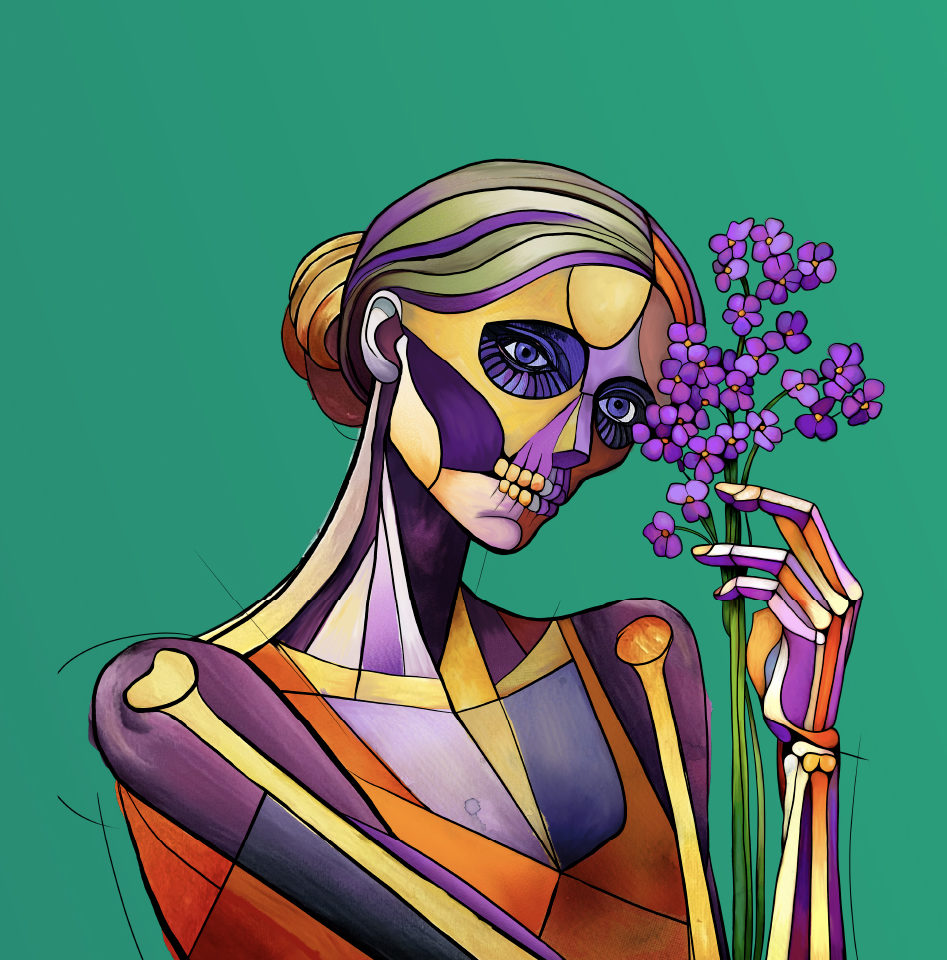
For a moment, Adriana and Michonnet are left alone. Too shy to reveal his love for her, Michonnet tells her that he has been left an inheritance and is thinking of marriage. When she appears to approve of the idea, he decides to propose to her, but she suddenly confides to him that she is also in love with the young soldier Maurizio, who she believes (erroneously) to be in the service of the Count of Saxony. Michonnet’s embarrassment is interrupted by Maurizio’s entrance. Adriana questions him about his chances for promotion, but his answer is evasive. They are unable to talk further because it is time for her to go on stage. She agrees to meet him after the performance and gives him a nosegay of violets as a keepsake.
The Prince and the Abbé return with Mademoiselle Duclos’s letter, obtained by bribing her chambermaid. It turns out to be an invitation from the actress to another gentleman, inviting him to meet her later that evening at the villa where she usually meets the Prince. The latter deduces that it must be Maurizio and supposes that the meeting is a romantic tryst. He decides to take his revenge by inviting the entire cast to a supper party at his villa after the performance, so that Maurizio and Mademoiselle Duclos can be caught together unawares. The Prince and the Abbé arrange to have the letter delivered to Maurizio, who is now sitting in a box in the theatre. Michonnet returns and places himself in such a way that he can see his beloved Adriana’s performance from the wings, but he suddenly remembers a “prop” letter that has to be given to her for her role as Roxane. Maurizio comes in with Duclos’s note in his hand, cursing the fact that the meeting to further his political ambitions will prevent him from meeting Adriana. Maurizio sees the “prop” letter on the table and has the bright idea of writing a note on it to inform Adriana that he won’t be able to meet her that night. The “prop” letter, now with Maurizio’s message scribbled on it, is picked up by one of the actresses and delivered to Adriana on the stage. Adriana’s reaction at reading the note while performing on stage is interpreted by Michonnet and the audience as another sign of her riveting acting commitment. When she comes off stage, visibly upset, she is invited by the Prince, together with the rest of the company, for a midnight supper at his villa.
Act II
A room in a villa by the Seine River.
The Princess of Bouillon is waiting impatiently for Maurizio, the man she secretly loves. When he arrives, he explains his tardiness stating that he was followed as he left the theatre. Suspicious, she points to the nosegay of violets pinned to his lapel, so he cleverly gives it to her, lying and saying that he brought it expressly for her. The Princess then informs him that she has begun to win over the Queen to his cause, warning him at the same time that he has powerful enemies in Paris. He states that he will leave Paris, but this causes her to rebuke him for not loving her. He refuses to mention Adriana and offers his friendship. She replies that friendship is mere ashes compared to the burning coals of passion. The Prince’s arrival saves him from the jealous fury of the Princess, who hides in an inner room. When the Prince and the Abbé enter, they taunt Maurizio about being caught with his mistress, whom they believe to be Duclos, and are surprised when he reacts quite violently. The Prince laughs off the situation saying that he was getting tired of Duclos and invites him to take her over with his blessings. Adriana arrives and finds out that Maurizio is in fact the Count of Saxony. When they are left alone, Adriana and Maurizio express their love for one another. They are interrupted by Michonnet, who is frantically searching for Duclos to speak to her about a new part that has just been offered to her. In embarrassment, he returns saying that the woman inside is not Duclos, but another woman whom he was unable to recognise in the darkness.
Maurizio makes Adriana promise that she will prevent the Abbé from discovering the identity of the mysterious woman in hiding, assuring her that it is someone he has met for political reasons. Adriana believes him and, when the others leave, she snuffs out the candles in the room and prepares to arrange for the unknown woman’s escape. But first, both of them, though unaware of each other’s identity in the dark, quarrel bitterly as rivals for Maurizio’s love. The servants come with torches and Adriana decides to take a risk and ask the torch bearers to illuminate the room. When she returns, the woman has made her escape through a secret door. “Coward!” she exclaims in frustration. However, in her haste the Princess has dropped her diamond bracelet on the floor, which is later picked up by Michonnet and given to Adriana.
Act III
A ballroom in Prince de Bouillon’s house.
Preparations are in progress for the reception under the supervision of the Abbé, who goes around reprimanding the servants. The Princess is still anxious to find out who her rival is and is also distressed because Maurizio has been put in jail for his debts. Even the Abbé’s flattering compliments can`t take her mind off this. Her husband, the Prince, passes by holding a small container with a whitish chemical powder in it. The government has asked him to perform a chemical analysis of it. The Princess takes momentary interest in this deadly powder and questions her husband about its harmful effects. The arriving guests include Adriana, whose voice is recognised by the Princess as her rival’s. She confirms her suspicions by announcing that Maurizio has been wounded in a duel, at which news Adriana faints, but she recovers a moment later when he himself makes his appearance. He goes at once to the Princess to thank her for having, as he wrongly believes, secured his release from prison. The Prince prevents him from saying any more and asks him to retell the story of his military assault on Mittau, which Maurizio boastfully recalls to the delectation of the guests.
A ballet, “The Judgment of Paris”, follows, after which Adriana and the Princess engage in an acrid battle of wits over the identity of Maurizio’s mistress. The Princess maliciously refers to a nosegay of violets and Adriana to a bracelet lost in flight, which she produces to the Princess’s obvious discomfort and embarrassment, all the more infuriating as the Prince has a look and states for all the assembled to hear that it is, indeed, his wife’s bracelet. Adriana further insults her rival when, asked to perform for the guests, she launches into a monologue from Phaedra, in which she reproaches herself for her infidelity and expresses terror at the imminent reunion with her husband. As the guests applaud her spirited performance, the Princess swears vengeance.
Act IV
A living-room in Adriana’s house, on 30 March, 1730.
Disappointed and unhappy, Adriana has decided to give up the stage. Michonnet comes in to visit her and, when the maid informs him that she is still sleeping, he sits to write a note which he then hands over to the maid to deliver to Maurizio as soon as possible. When Adriana comes in, he tries to comfort her, unsuccessfully. Her colleagues from the Comédie arrive with gifts –it is her name day– and beg her to return to the theatre. Then, Michonnet gives her his gift: the necklace she had pawned to secure Maurizio’s release from jail. As Adriana’s spirits begin to rise, the maid brings in another gift, a small velvet casket with a note where a simple message can be read “From Maurizio”. Michonnet, wishing to leave Adriana alone, ushers the actors into another room to have a drink, certain that Maurizio will be there any moment. When Adriana opens the casket, she only finds the faded bunch of violets that she had given to her lover at the theatre that night. At first she recoils from the odour and expresses her distress at the fact that Maurizio has now added further insult to the injury. Michonnet comforts her, trying to assure her that this is not from Maurizio, but rather from a female rival. Maurizio rushes in to beg Adriana’s forgiveness, explaining that spiteful gossip has been the cause of their estrangement. Adriana is suspicious at first, but when Maurizio finally proposes marriage to her she relents. Her rapture is cut short by spasms of pain, which she blames on the scent of the flowers that he has sent to her. Maurizio protests that he did not send them. He examines the casket and realises that they were sent by the Princess, after having sprinkled the violets with her husband’s poisonous powder. Adriana becomes delirious, to the horror of Maurizio and Michonnet. Realising that she is dying, she beseeches them to save her so that she may find happiness with Maurizio at last. It is too late. Delirious once again, she seems to be back on stage and declares that her spirit is flying towards a mysterious distant light. She falls lifeless into the arms of her lover and her only faithful friend.